Sunburn Treatment: First Aid and When To Seek Help 

What is sunburn and what are the first signs?

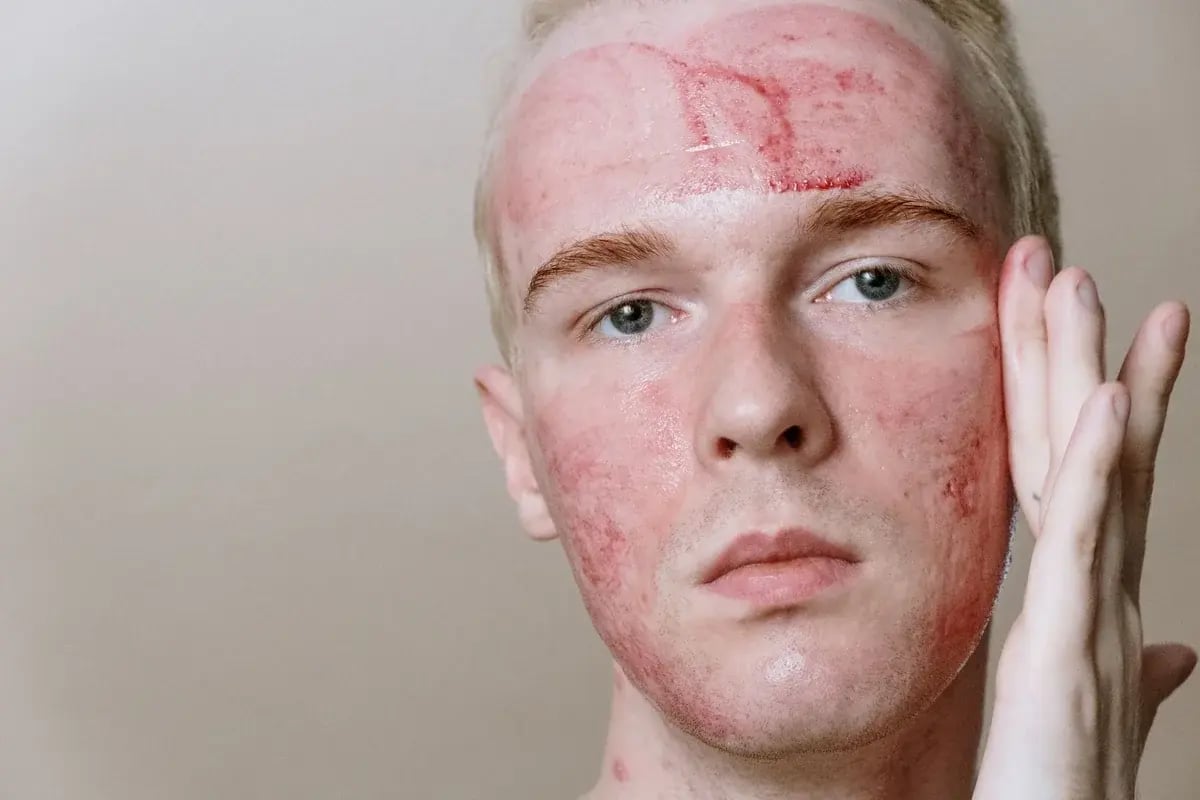
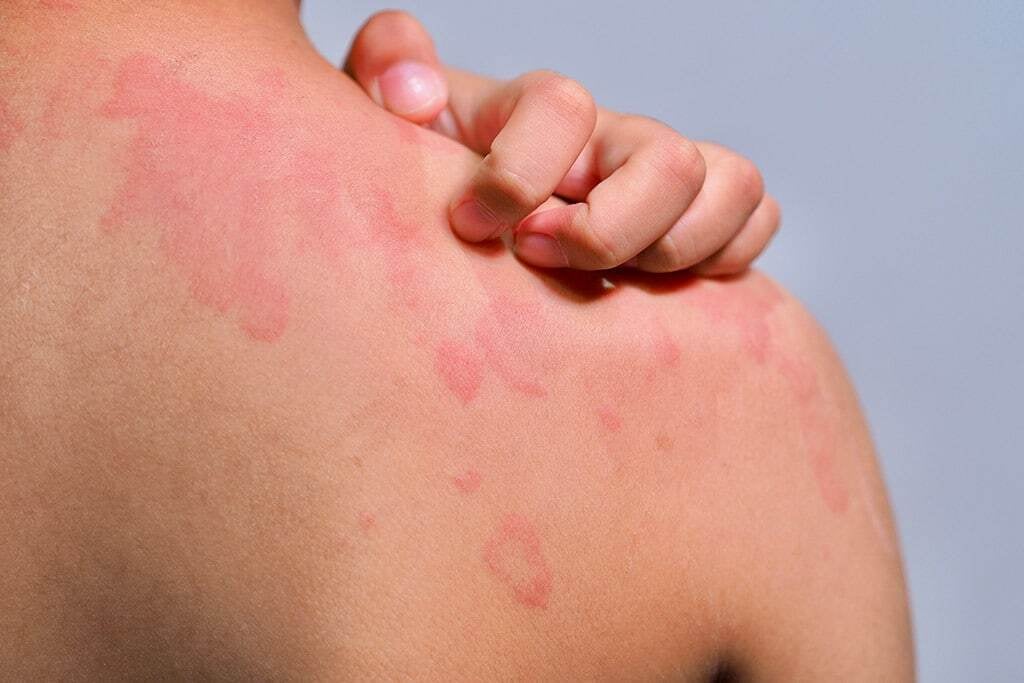
Sunburn is an inflammatory skin response occurring when ultraviolet radiation causes direct damage to the DNA in your skin cells. It is not a heat burn, meaning you can easily get severely sunburned on a cold or overcast day. The first signs include the skin feeling unusually hot, tender, and appearing red or flushed.
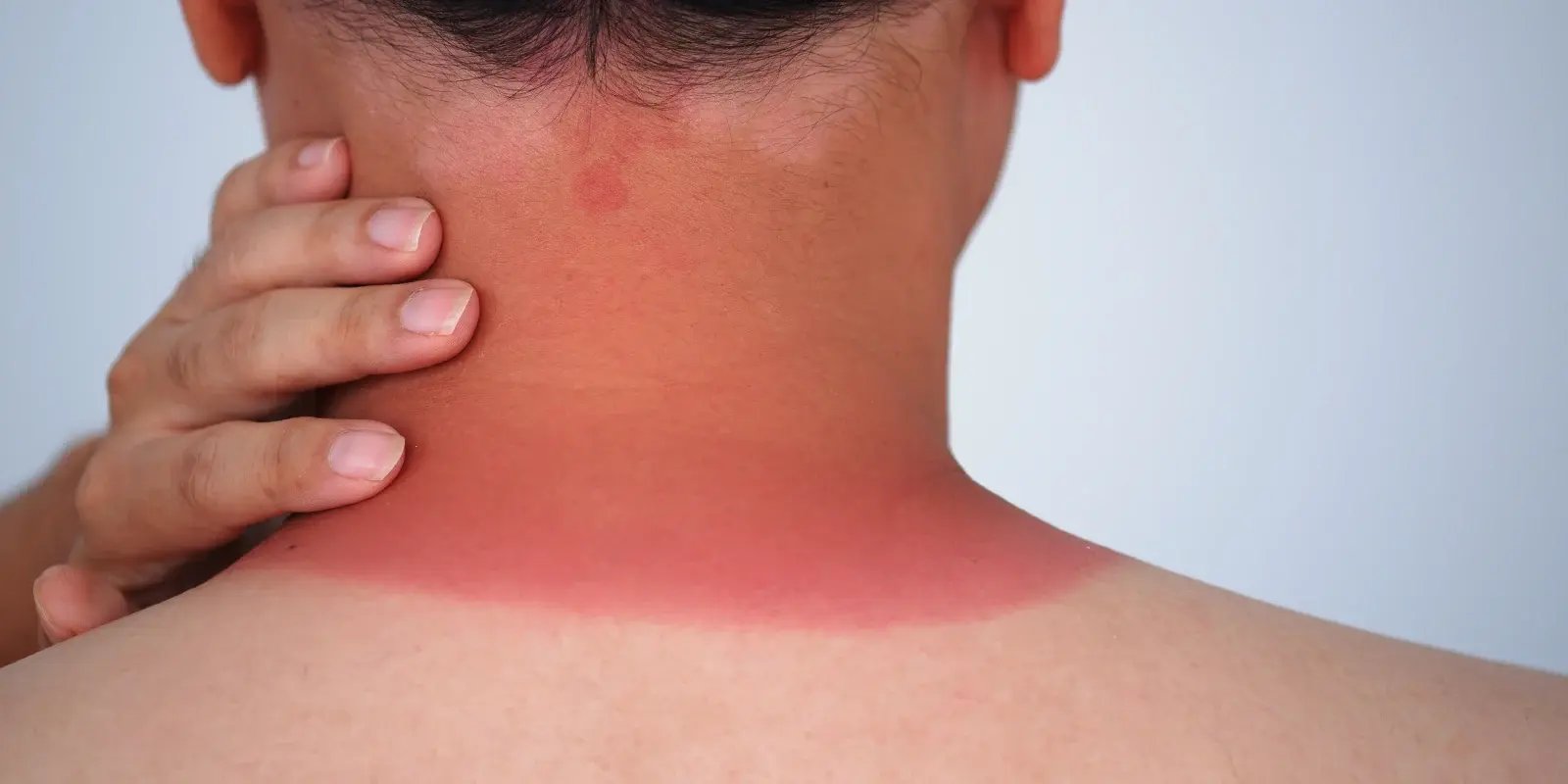
 

Man with sunburn on neck

The science of a sunburn

The sun emits different types of ultraviolet (UV) radiation. UVA rays penetrate deeply into the skin and are primarily responsible for long-term ageing and wrinkles. UVB rays are shorter, carry more energy, and are the main cause of the burning and cellular damage we call sunburn.

When these rays damage your skin cells, your body responds by increasing blood flow to the area to help with healing. This extra blood flow causes the skin to feel hot and look red. Symptoms do not appear immediately. It typically takes between four and six hours after sun exposure for the first signs of sunburn to develop.


Mild to moderate sunburn symptoms

If you have spent too long in the sun, you may start to notice:

    • Skin feeling unusually hot or warm to the touch
    • Pain, tenderness, or a stinging sensation
    • Redness or a pink flush on lighter skin tones
    • Slight swelling or tightness across the affected area

Assessing sunburn severity

You can determine the severity of your sunburn by examining the depth of skin damage, checking for blisters, and noting if you feel generally unwell. Sunburn ranges from a mild surface irritation to a severe medical emergency.

Mild sunburn

Mild sunburn only affects the very outer layer of your skin, known as the epidermis. The main symptoms are redness, mild pain, and minor inflammation. The skin might feel tight and tender, but it will not blister. With simple home care, mild sunburn typically heals within three to five days.

Moderate sunburn

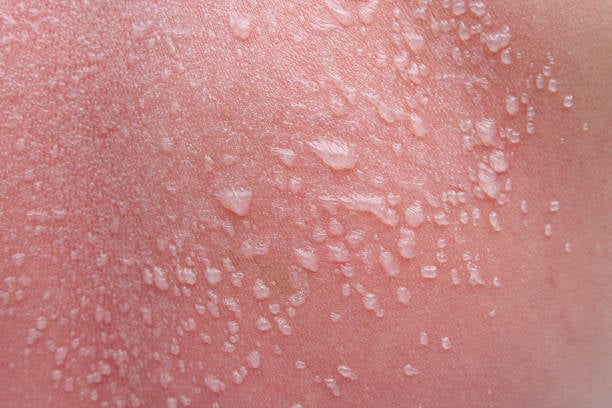
If the UV damage reaches the deeper layer of your skin, known as the dermis, you have a moderate sunburn. Symptoms include significant swelling, intense pain, deep redness, and the formation of fluid-filled blisters. Healing from a moderate sunburn takes longer, often over a week, and usually involves noticeable peeling as the damaged skin sheds.

Severe sunburn

Severe sunburn affects large areas of the body and can cause a systemic reaction, sometimes referred to as sun poisoning. According to UKHSA sun safety guidance, sunburn combined with heat exhaustion can become a medical emergency. You require urgent medical attention if you experience widespread and severe blistering, fever, chills, a severe headache, confusion, dizziness, nausea, or signs of dehydration.

Sunburn on Black and brown skin

Sunburn can be harder to spot on darker skin tones because the typical redness is less visible. If you have Black or brown skin, you should look for other key indicators. Your skin may feel warm, hot, tight, or painful to the touch. The affected area might darken temporarily compared to your usual skin tone. Peeling skin a few days after being in the sun is also a clear sign of a recent burn.

Symptom

Mild Sunburn

Moderate Sunburn

Severe Sunburn

Colour change

Pink or red on light skin; subtle darkening on dark skin

Deep red on light skin; noticeable darkening on dark skin

Widespread, intense colour change

Pain level

Mild to moderate tenderness

Intense pain and stinging

Severe, debilitating pain

Blisters

None

Small to medium blisters

Widespread, large blisters

Systemic symptoms

None

Occasional mild fatigue

Fever, nausea, confusion, chills

Healing time

3 to 5 days

7 to 10 days

Requires medical treatment

Immediate first aid for sunburn

The immediate first aid steps for sunburn are to get out of the sun, gently cool the skin, manage pain, and drink plenty of water to stop the damage from getting worse. The absolute priority when you realise you are burned is to safely and gently bring the temperature of the skin down.

Get out of the sun

Move indoors or to a fully shaded area immediately. You must prevent any further UV radiation from hitting your damaged skin. Covering up with loose clothing is helpful, but physically getting out of the sun is the most effective first step.

Cool the skin gently

You should cool your skin as soon as possible. Take a cool, but not freezing cold, bath or shower. Alternatively, you can apply cool, damp compresses to the burned area for 10 to 15 minutes several times a day. The NHS strongly advises against using ice or ice packs directly on sunburn, as extreme cold can restrict blood flow and cause further damage to already fragile skin.

Manage pain and inflammation

If you are in pain, over-the-counter painkillers can help. The NHS notes that ibuprofen is an anti-inflammatory medicine that can reduce both pain and swelling. If you cannot take ibuprofen, NHS guidance confirms paracetamol is a safe alternative for pain relief, though it will not reduce inflammation in the same way.

Drink plenty of water

Sunburn draws fluid to the skin's surface and away from the rest of your body. This rapid fluid shift significantly increases your risk of dehydration. You should drink plenty of water over the next few days to replace these lost fluids and support your body's healing process.

Home care remedies for sunburn

Do: moisturise damp skin

You should apply a gentle, fragrance-free, water-based moisturiser, gel or after sun product to your skin, ideally straight after a cool shower when your skin is still slightly damp. Lotions containing soothing ingredients like aloe veraare excellent for calming irritated skin. Regular moisturising helps to ease the feeling of dryness and tightness, and can reduce the severity of peeling later on.

Do: leave blisters alone

If you have sunburn blisters, leave it intact if you can. Blisters form a natural, sterile barrier that protects the delicate healing skin underneath from infection. If a blister breaks accidentally, gently clean the area with water, and cover it loosely with a non-stick dressing.

Don't: use oil-based products or petroleum jelly

You should avoid heavy, thick creams and ointments on fresh sunburn. NHS guidance specifically warns against using petroleum jelly on sunburn on fresh sunburn. Thick, occlusive products can form a barrier that traps the heat in and slows cooling.. Always choose light, water-based lotions or gels.

Don't: peel your skin

As your sunburn heals, the damaged skin will begin to flake and peel. This is a natural part of the recovery process as your body sheds dead cells. You must resist the urge to pull or peel this skin off. Forcing the skin to peel before it is ready can tear the fragile new skin underneath, leading to scarring and greatly increasing your risk of a bacterial skin infection. Let the skin flake off naturally in its own time.

Healing timeline for sunburn

The healing timeline for sunburn typically starts with peak pain and redness on days one to two, followed by peeling and itching on days three to five, and concludes with recovery and new skin forming by days six to ten.

Days 1 to 2: peak pain and redness

The first 24 to 48 hours are usually the most uncomfortable. The inflammatory response is at its peak, meaning the skin will be at its reddest, hottest, and most painful. Blisters, if they are going to form, will usually appear during this window. Your focus during this time should be entirely on cooling the skin and managing pain.

Days 3 to 5: peeling and itching begins

As the initial inflammation subsides, the pain usually lessens. At this stage, your skin will begin to heal and you will likely experience peeling and itching, known clinically as pruritus. To manage the itch, continue using cool compresses and light moisturisers. Taking a cool bath with colloidal oatmeal can also provide relief. If the itching is severe and disrupting your sleep, a pharmacist can advise if an antihistamine is appropriate for you.

Days 6 to 10: recovery and new skin

By the end of the first week, most of the dead skin will have peeled away. The new skin underneath will look healthy but will be highly sensitive. It is vital to protect this new, delicate skin from further UV damage. You must keep it covered with clothing and use a high-factor sunscreen whenever you are outside.

When to see a doctor for sunburn

You should see a doctor for sunburn if you experience severe systemic symptoms, signs of a skin infection, or if a baby or young child is burned.

When to get urgent help

  • Call 999 if: you have symptoms of heatstroke including:
    Still being unwell after 30 minutes of resting in a cool place, being cooled and drinking fluid

  • A very high temperature

  • Hot skin that’s not sweating and might look red

  • A fast heartbeat

  • Fast breathing or shortness of breath

  • Confusion and/or lack of co-ordination

  • Have had a seizure of a fit or

  • Have lost consciousness

Call 111 or ask for an urgent in person GP appointment if:

  • Your skin is blistered or swollen

  • Your temperature is very high, or you feel hot, cold or shivery

  • You feel very tired, dizzy or sick

  • You are vomiting

  • You have a headache

  • You have muscle cramps or

  • Your baby or young child has sunburn.

sun burn blister

Signs of a skin infection

Because sunburn damages the skin's protective barrier, bacteria can enter, especially if blisters pop or you scratch peeling skin. You should speak to a doctor if you notice increased swelling, spreading redness, pus or yellow discharge leaking from blisters, increased pain in otherwise healing sunburn, or red streaks leading away from the burn. These are signs of a secondary bacterial infection that may require prescription antibiotics.


Sunburn in babies and young children

A baby's skin is much thinner and more sensitive than adult skin. Any sunburn in a baby or a young child requires an urgent medical assessment. All children have a lower threshold for seeking medical assessment than adults. They dehydrate faster, and systemic illness can progress quickly. For older children, you should seek in person medical help if they are vomiting, they have blisters, they are refusing to drink or showing signs of dehydration, there pain isn’t controlled with simple pain relief, they are sleepy or irritably, or symptoms are worsening and you are worried.

Frequently asked questions

 The most frequently asked questions about sunburn involve identifying sun poisoning, preventing peeling, returning to the sun safely, and understanding why healing skin becomes itchy. 

The difference between sunburn and heat stroke is the severity and spread of symptoms. While standard sunburn is localised to the skin, heat stroke i involves systemic symptoms like a high fever, chills, nausea, and severe dehydration. According to UKHSA guidelines on heat health risks, these severe symptoms require urgent medical evaluation. 

 You cannot stop a sunburn from peeling once the damage is done. Peeling is your body's natural mechanism for removing damaged skin cells that could otherwise become cancerous. You can make the peeling less noticeable and more comfortable by keeping your skin well moisturised with light lotions and staying fully hydrated. 

 After a bad sunburn, you should stay completely out of the sun until all redness, pain, and peeling have stopped. This process can take a week or more. Even after symptoms resolve, the newly healed skin remains highly sensitive. The NHS advises taking extra care to protect your skin with clothing and sunscreen to prevent repeated damage. 

Hydrocortisone cream is not routinely recommended to help simple sunburn. The BNF states that topical corticosteroids should only be used for severe sunburn on the explicit advice of a healthcare professional. For mild burns, you should stick to simple moisturisers and oral painkillers to safely manage your symptoms at home unless a clinician advises otherwise.

 Your sunburn gets so itchy when it is healing because your immune system releases histamines to trigger inflammation and repair. These histamines stimulate nerve endings in your skin, which your brain interprets as an itch. Additionally, as your skin dries out and begins to flake, the physical peeling further irritates these nerve endings. 

See a UK GP today

Skip the wait — book an online appointment and get expert advice from a UK-registered clinician in as little as 2 hours. 

Related Topics