Are Freckles A Sign Of Sun Damage?
Freckles are a sign that your skin has been exposed to the sun, but they are not a form of sun damage themselves. They are a visible marker of a sun-sensitive skin type, which is linked to a higher risk of developing skin cancer. It is important to know the difference between harmless freckles, sun spots (a more direct sign of damage), and moles, and to protect your skin from the sun.
Many people wonder if the freckles that appear after a day in the sun are a harmless feature or a sign of skin damage. In our virtual consultations, this is a question our online GPs are often asked.
While freckles themselves are not cancerous or a form of damage, they are an important signal from your skin. They tell you about your skin’s sensitivity to the sun and your overall risk of developing skin cancer in the future. Here, we explain what freckles are, how they differ from other pigmented spots, and what they mean for your long-term skin health.
Freckles indicate sun exposure, not sun damage
Freckles are small, harmless brown spots that form on the skin in response to sunlight, indicating a history of sun exposure. Although the freckles themselves are not a type of damage, the tendency to develop them is associated with a higher risk of skin cancer.
The short answer: freckles show sun exposure, not damage
Freckles, known clinically as ephelides, are small, harmless brown spots. They appear when your pigment-producing cells, called melanocytes, produce extra melanin in response to ultraviolet (UV) light from the sun.
Think of them as an indicator light. They are a sign that your skin has been exposed to the sun, but the freckles themselves are not a form of damage or pre-cancer. However, having skin that freckles easily is recognised by the NHS as a factor that places you at a higher-than-average risk of developing skin cancer. This is because it signals that you have a skin type that is more vulnerable to the damaging effects of UV radiation.
How UV light creates a freckle
When your skin is exposed to UV radiation, either from the sun or from sunbeds, it stimulates your melanocytes to produce more of the dark pigment called melanin. This is the body's attempt to protect the deeper layers of your skin from UV damage.
In people with a particular genetic predisposition, this melanin is not produced and distributed evenly across the skin. Instead, it clumps together in small, concentrated areas. These clusters of melanin become visible on the surface as freckles. This process is why freckles tend to become darker and more numerous in the summer with increased sun exposure, and then fade during the winter months.
Common freckles are different from sun spots and moles
It is important to be able to distinguish between common freckles, sun spots, and moles, as they have different causes and implications for your skin health. In our experience, people often use these terms interchangeably, but a GP or dermatologist sees them as very distinct skin lesions.
Common freckles (ephelides): what to look for
These are the spots most people think of as freckles. They usually appear in childhood after sun exposure and are most common in people with fair skin.
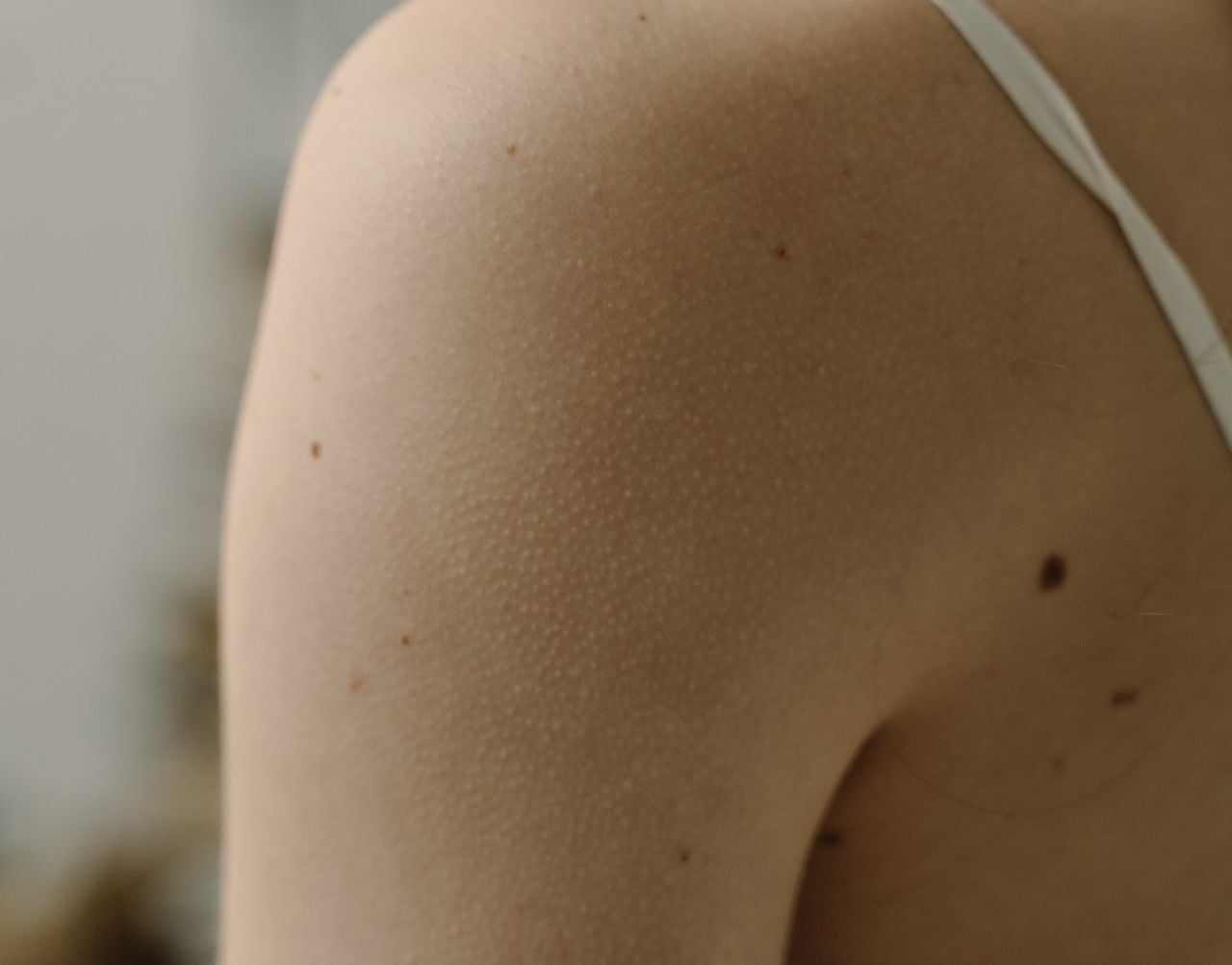
- Appearance: Typically small (around 1-2mm), flat, and light brown or tan in colour. They often have indistinct or blurry borders.
- Location: Most common on sun-exposed areas like the face, nose, shoulders, and arms.
- Behaviour: They characteristically darken in the summer and fade or even disappear in the winter.
Sun spots (solar lentigines): a more direct sign of sun damage
Also known as 'age spots' or 'liver spots', solar lentigines are a different type of pigmented lesion. Unlike common freckles, they are a direct result of chronic, long-term sun exposure and are a feature of sun-damaged skin, which the British Association of Dermatologists notes often looks blotchy and freckled.
- Appearance: Usually larger than freckles (can be several millimetres to over a centimetre wide), darker brown, and have a more clearly defined, sharp edge.
- Location: Appear on areas with the most cumulative sun exposure over a lifetime, such as the face, back of the hands, and upper back.
- Behaviour: They do not fade in the winter and tend to become more numerous as you get older.
Moles (naevi): what makes them different
Moles, or naevi, are fundamentally different from both freckles and sun spots. They are not just areas of extra pigment; they are small, localised growths on the skin formed by clusters of melanocyte cells. Most people have some moles, and they are usually harmless.
- Appearance: Can be flat or raised, are typically round or oval with smooth edges, and are usually a single, consistent shade of brown or black.
- Location: Can appear anywhere on the body, including areas not exposed to the sun.
- Behaviour: They do not typically change with the seasons, although they can change slowly over many years. A mole that changes quickly should always be checked by a doctor.
|
Feature |
Common Freckle (Ephelis) |
Sun Spot (Solar Lentigo) |
Mole (Naevus) |
|---|---|---|---|
|
Appearance |
Small (1-2mm), flat, light brown, indistinct border |
Larger, flat, darker brown, sharp, clear border |
Can be flat or raised, round/oval, one consistent colour |
|
Typical Age of Onset |
Childhood |
Usually over 40 |
Can be present at birth or appear throughout life |
|
Cause |
Genetic tendency + acute sun exposure |
Chronic, cumulative sun exposure |
A benign growth of melanocyte cells |
|
Does it fade in winter? |
Yes |
No |
No |
|
Cancer Risk |
The freckle itself has no cancer risk, but indicates a higher-risk skin type |
usually Harmless, but a sign of significant sun damage, which is a risk factor for skin cancer |
Very low, but a small number can change and develop into melanoma |
Some melanomas don't follow these rules so make sure you see a doctor if you are concerned.
Freckles indicate a skin type with a higher risk of skin cancer
The link between freckles and skin cancer risk can be confusing. It is not the freckles themselves that are the problem; rather, it's what they tell you about your skin's genetic makeup and how it reacts to the sun.
It's about your skin type, not the freckles themselves
Having freckles is a key visible marker of a sun-sensitive skin type. This usually is more common Fitzpatrick skin types I and II, which are characterised by skin that burns easily, tans poorly, and is often paired with fair hair and light-coloured eyes.
It is this underlying skin type that has a higher genetic risk of developing skin cancer when exposed to UV radiation. The NHS confirms that people with fair skin, moles or freckles are at a higher risk. The freckles are a signal that your skin's cells are more susceptible to the DNA damage caused by UV light, which can lead to the development of skin cancers like melanoma, basal cell carcinoma, and squamous cell carcinoma. The freckle itself will not turn into a cancer.
What the MC1R gene tells us about risk
The tendency to freckle is strongly linked to variations in a gene called MC1R (melanocortin-1 receptor). This is the primary gene responsible for red hair, pale skin, and freckling.
Research has shown that the same MC1R gene variations are also associated with a less effective type of melanin pigment (pheomelanin) when it comes to sun protection. This pigment is less able to block damaging UV rays compared to the eumelanin pigment found in people with darker skin who tan more easily. This genetic factor helps to explain why people with freckly, fair skin have a significantly increased risk of developing melanoma.
Regular self-checks can help you spot cancerous changes early
If you have a lot of freckles and moles, checking your skin can feel daunting. However, regular self-examination is good way to spot potential skin cancer early. The key is to learn what is normal for you and to look for anything that stands out.
1. Know what's normal for you
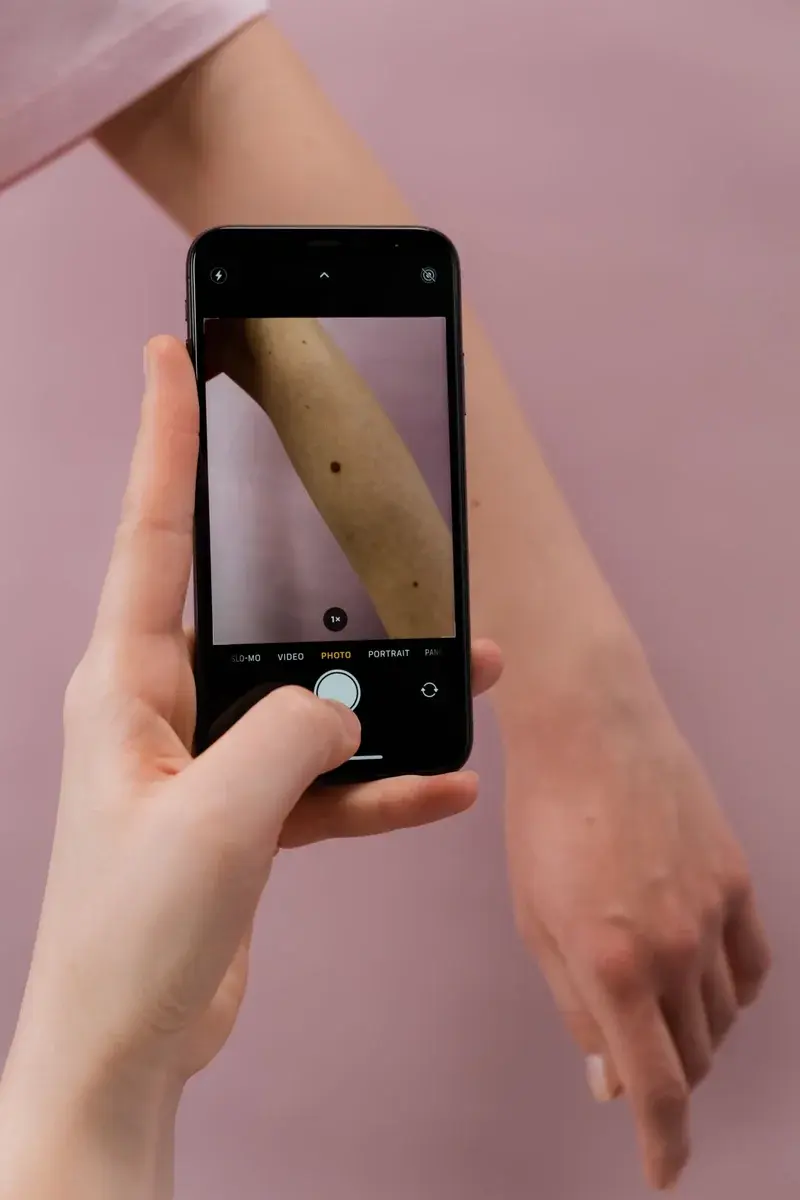
Spend some time getting to know the pattern of spots on your skin. Use a full-length mirror and a hand mirror to check your whole body, including your back, the soles of your feet, and between your fingers and toes. Take photos to help you track any changes over time. When you are familiar with your skin's baseline, it is much easier to notice a new spot or a change in an existing one.
2. Look for the 'ugly duckling'
A very useful method, especially for people with numerous moles, is the 'ugly duckling' sign. Most of the normal moles on your body will look similar to one another. A spot that looks or feels different from all the others is the 'ugly duckling' and should be given extra attention. It might be a different colour, size, or shape, or it might be a solitary spot with no others nearby.
3. Use the ABCDE method to check your moles
The ABCDE checklist is a simple and effective way to assess your moles for the features of melanoma, the most serious type of skin cancer.
- Asymmetry: One half of the mole does not match the other.
- Border: The edges are irregular, ragged, notched, or blurred.
- Colour: The colour is not the same all over. There may be different shades of brown or black, or patches of pink, red, white, or blue.
- Diameter: The spot is larger than 6mm across (about the size of the end of a pencil), although melanomas can sometimes be smaller.
- Evolving: The mole is changing in size, shape, colour, or height, or it has started to bleed, itch, or crust.
4. Spotting other forms of sun damage
It is also important to look for signs of other, more common types of skin cancer and pre-cancerous changes. Actinic keratoses are a common example of pre-cancerous sun damage. The British Association of Dermatologists describes them as small, rough, or scaly patches of skin that can feel like sandpaper. They often appear on sun-exposed areas and should always be assessed by a doctor.
When to get urgent help
See a GP urgently if you notice:
-
A new mole or a mole that is changing in size, shape, or colour.
-
A spot that looks different from all your others (an 'ugly duckling').
-
Any spot or patch of skin that is itchy, bleeding, painful, or crusty for more than four weeks.
-
A sore that does not heal.
Our online GP service is not an emergency service. If you or someone else is seriously unwell, call 999 or go to A&E.
Diligent sun protection is essential for people with freckles
Because having freckles indicates a sun-sensitive skin type, diligent sun protection is the most important step you can take to reduce your risk of skin cancer. Sunscreen alone is not enough; a comprehensive approach is needed.
Choosing the right sunscreen
Always use a broad-spectrum sunscreen that protects against both UVA and UVB rays. The NHS recommends choosing a product with:
- A sun protection factor (SPF) of at least 30 to protect against UVB.
- A UVA rating of at least four stars.
Applying sunscreen correctly
How you apply sunscreen is just as important as which one you choose. Most people apply too little, too late. Apply it generously to all exposed skin 30 minutes before you go outside. You should reapply it at least every two hours, and more frequently if you have been swimming, sweating, or towel drying. Remember, developing a tan is not a sign of health; it is a sign of your skin being damaged by UV radiation.
Beyond sunscreen: clothing, shade and timing
Sunscreen cannot provide 100 per cent protection. The best defence involves multiple layers of protection:
- Seek shade: Stay out of direct sun, especially between 11am and 3pm from March to October in the UK, when UV rays are strongest.
- Cover up: Wear loose-fitting clothing made from a tightly woven fabric.
- Wear a hat: Choose a wide-brimmed hat that shades your face, neck, and ears.
- Protect your eyes: Wear sunglasses that have a CE mark and offer 100 per cent UV protection.
Learning about the best ways to apply sunscreen can make a significant difference to your skin health.
A GP can provide professional advice for skin concerns
Understanding your skin is the first step towards protecting it. Remember these three key points:
- Freckles are not a form of damage, but they are a clear sign of sun exposure and a sensitive skin type.
- It is vital to know the difference between harmless common freckles, sun spots (which show long-term damage), and moles.
- Your best defence against skin cancer is vigilant sun protection and regular skin checks, paying close attention to any new or changing spots.
Get to know the normal pattern of your skin. If a spot on your skin is new, changing, or just worrying you, it is always best to get it checked by a professional for peace of mind.
Speak to a GP if a skin change persists, gets worse or you notice any new symptoms. Book an appointment with a Doctor Care Anywhere GP for a professional assessment. You can often book a GP appointment for the same day, subject to availability. A Doctor Care Anywhere GP can discuss your skin concerns, review photographs and advise whether further review is needed.
Frequently asked questions
An itchy freckle is not usually a sign of skin cancer, as most skin itchiness is caused by harmless things like dryness or irritation. However, the NHS advises that any new or changing spot that is persistently itchy should be checked by a GP, especially if it also shows other features from the ABCDE list.
Whether someone gets freckles is determined by a combination of genetics and sun exposure. People with variations in certain genes, especially the MC1R gene, have the predisposition to freckle. These genes are most common in fair-skinned individuals. UV light exposure then triggers their pigment-producing cells to create the characteristic spots.
Common freckles can fade and seem to disappear completely, especially during winter months with less sun exposure. These childhood freckles (ephelides) may not vanish entirely but become much lighter. In contrast, sun spots (solar lentigines) are a more permanent sign of long-term sun damage and do not fade on their own.
The age freckles appear depends on their type. Common freckles (ephelides) typically first appear in early childhood, often around age two or three, on sun-exposed skin. In contrast, sun spots (also called 'age spots' or solar lentigines) are different and tend to appear in adults, usually over the age of 40, after many years of cumulative sun exposure.